

Articles
Measuring the True Cost of Fraud
What’s the cost of fraud? Financial institutions typically confront the true cost of fraud only after a loss event. Until the dollar figure of a major incident is staring someone in the face, it's hard to grasp the real impact and cost to the institution. But the number that financial institution leaders typically focus on - dollars lost - isn't the whole equation. The real costof fraud includes a...

Illicit Flows are Compounding Faster than the Global Economy
When illicit financial activity climbs to an estimated $4.4T in a single year, the number becomes staggering. But the more destabilizing story is the rate of change behind it: a 19.2% compound annual growth rate (CAGR) from 2023 to 2025—far outpacing global GDP growth of 3.6%. That level of compounding signals that the...
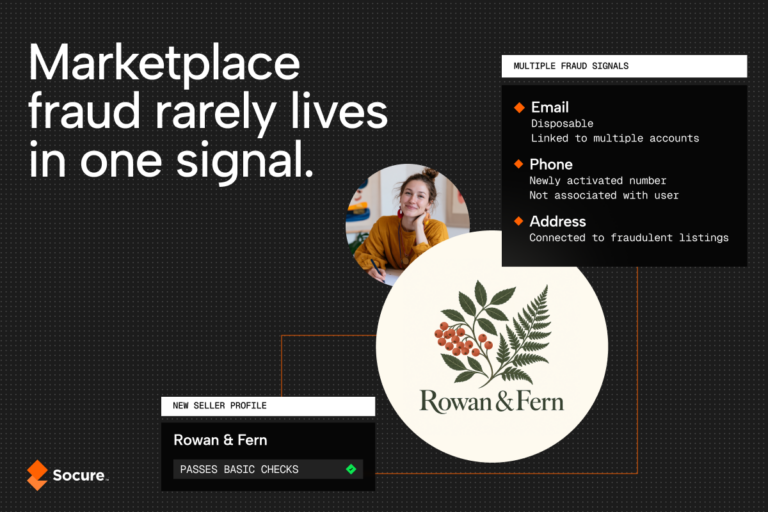
Identity Verification Starts Trust. Continuous Signals Protect Marketplaces from Fraud
A user can pass an identity verification check, build a credible history, and still become part of a fraud event down the line. That's because fraudsters are no longer hiding behind fake identities. They’re hiding behind mule accounts: real people, with valid IDs, and established account histories. I recently sat down with...
Right Password, Wrong Person: Catching Account Takeover Through Behavior, Not Identity
The fraud is coming from inside the house Imagine a house sitting quiet while its owners are away on vacation. A few weeks earlier, someone posing as a representative from the security company had called and asked them to verify their alarm code over the phone. They gave it up without a...
The Fraud Fight Has Reached an Inflection Point. Here’s What That Means for Your Team.
I’ve been in the industry for over 20 years, traveled around the country to conferences, and listened to dozens of panels and keynotes. More times than not, the “next big thing” turns out to be a passing fad, or a shift that takes years to fully materialize. This was not the case...

Funding, Investment, Acquisitions & IPOs – Q2 2026
Q2 2026 has wrapped up! Time for our quarterly investment update. Explore the latest funding rounds and acquisitions in the world of fraud prevention, identity verification, and risk mitigation — a quarter defined by a landmark raise in AI-powered decision automation, a wave of Series A capital flowing into compliance tooling across...

Behavioral Metrics Were Built for Humans. Humans Are Leaving the Loop.
Behavioral models were built to read friction. Not just to catch anomalies, but to interpret the uneven way people move through digital experiences. The hesitation before a purchase. The abandoned cart. The login that never quite completes. The return hours later with less certainty than before. These patterns weren’t inefficiencies. They were...

Dating Apps are Having an Identity Crisis
Last year, a convicted criminal turned up on Bumble as "Steve, 53." The world knows him by another name. His profile pics were of Hamish McLaren, one of Australia's most documented serial con men, convicted of defrauding fifteen victims of more than $7.6 million AUD, with global losses estimated at over $70...

Defeating Deepfakes: Securing the Lens and the Mobile Network
I was reading a recent piece in Infosecurity Magazine about biometric fraud, and it got me thinking about how quickly the identity verification industry has changed over the past few years. For a long time, identity fraud followed a relatively familiar pattern. Criminals needed stolen credentials, compromised databases, intercepted SMS messages, or...